

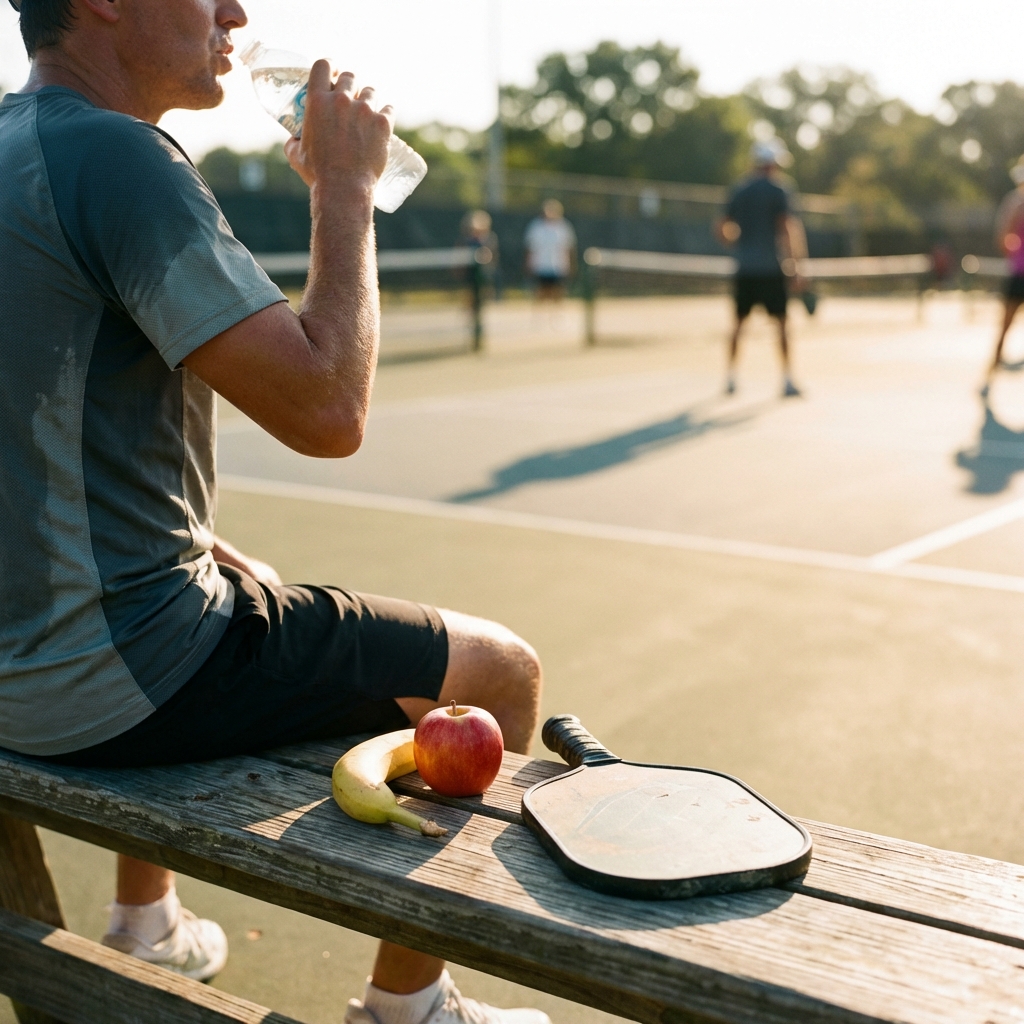
Why Nutrition Changes Your Game
We often obsess over our paddle tech—spending hundreds on the latest carbon fiber weave—yet we ignore the engine driving the paddle: our body. Pickleball is an explosive sport. It requires short bursts of intense energy, rapid reaction times, and sustained focus over hours of play.
If you have ever felt your energy crash in the third game, or experienced "brain fog" where you just can't track the ball, that is rarely a lack of skill. It is a fuel failure. Proper nutrition does not just help you run faster; it keeps your mind sharp. Mental fatigue is often the first sign of physical depletion. Check out our guide on The Mental Game of Pickleball to see how closely focus is tied to physiology.
The Science of Hydration
Dehydration is the number one performance killer. By the time you feel thirsty, you are already dehydrated. A loss of just 2% body water weight can lead to a 20% decrease in physical performance and a significant drop in cognitive function.
Water vs Electrolytes
Water is great, but when you sweat, you lose salt (sodium), potassium, and magnesium. Drinking only plain water during intense heat can actually dilute your blood sodium levels (hyponatremia). For sessions longer than 60 minutes, you need electrolytes. Sodium prevents cramps; magnesium aids muscle relaxation.
Cramping is a common enemy on the court. While often blamed on bananas (potassium), sodium loss is the more frequent culprit. Read more about preventing physical breakdowns in our Pickleball Injury Guide.
Pre-Match Fueling
Your pre-match meal tops off your glycogen stores (energy in muscles). Timing is everything.
The Fueling Timeline
3-4 Hours Before
Goal: Full Meal
Complex carbs + moderate protein. Low fat to aid digestion.
Ex: Oatmeal with berries & eggs, or Chicken with rice.
1 Hour Before
Goal: Top-up Snack
Simple carbs that digest easy.
Ex: Banana, Toast with jam, or a small energy bar.
15 Mins Before
Goal: Hydration
Sip electrolytes. Avoid heavy foods now.
What to Eat During Tournaments
Tournaments are marathons, not sprints. You might be at the courts for 8 hours. Big heavy meals (like that burger from the food truck) will make you sluggish as your body diverts blood to digestion instead of your legs.
The Grazing Strategy: Eat small amounts frequently. Focus on simple carbohydrates between matches:
- Bananas or Oranges (classic for a reason)
- Pretzels (great for salt replenishment)
- Digestive biscuits
- Energy gels (if you stomach them well)
Post-Match Recovery
The game ends, but the preparation for tomorrow begins instantly. Your recovery window is most open in the 30-60 minutes after play. You generally need the "3 R's": Rehydrate, Refuel (Carbs), Repair (Protein).
Physical recovery isn't just food. It's active movement too. We highly recommend a structured cool-down routine. The Yoga for Pickleball Program is excellent for flushing lactic acid and preventing stiffness the next day.
Supplements: Do You Need Them?
Real food often beats powders, but supplements fill convenience gaps. Creatine Monohydrate is one of the few well-researched supplements that aids explosive power (like a volley put-away), though it requires consistent daily intake, not just on game day. Caffeine is a potent performance enhancer for focus, but beware of the jitters if you rely on soft hands for dinking.
Full Day Tournament Meal Plan
Here is a sample schedule for an 8:00 AM start time.
| Time | Activity | Nutrient Focus |
|---|---|---|
| 6:00 AM | Wake Up | 16oz Water + Electrolytes |
| 6:30 AM | Breakfast | Oats, Protein Powder, Berries |
| 8:00 AM | Matches Begin | Sip sports drink between points |
| Between Games | Snack | Half a banana or handful of pretzels |
| 1:00 PM | Lunch | Turkey wrap (light on mayo) + Apple |
Pair this nutrition plan with a solid fitness application. Strength training improves your body's glycogen storage capacity. The Pickleball Workouts Program helps build the metabolic engine that this food fuels.
Conclusion
Nutrition is the lowest hanging fruit for improving your pickleball game. It requires no lessons, no drilling partner, and no expensive gear. It just requires planning.
Start small. Focus on hydration first, then optimize your pre-match meal. You will notice the difference when your opponents are fading in the final set, and you are just getting started.
Want to dive deeper into strategy? Check out our Doubles Strategy Guide to put that extra energy to good use.