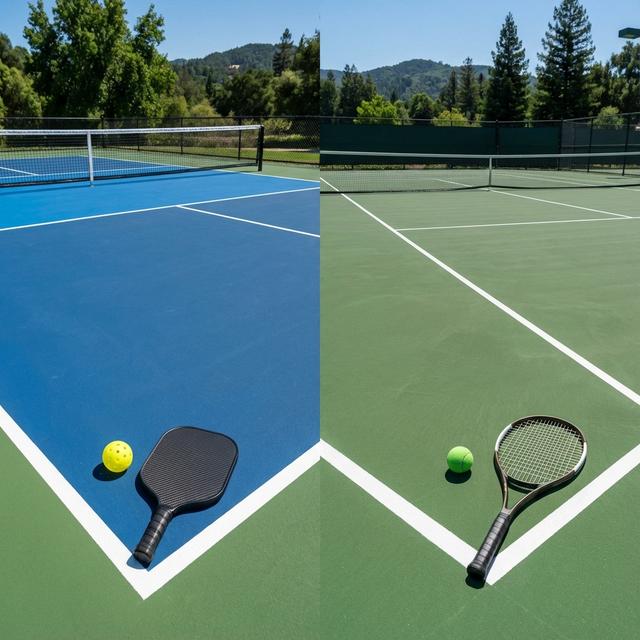
The Quick Answer: Pickleball vs Tennis at a Glance
Let's cut to the chase. If you're in a hurry, here's the fundamental difference: Pickleball is easier to learn, less physically demanding, and far more social. Tennis requires more athleticism, has a steeper learning curve, and offers a higher skill ceiling for competitive players.
But that's oversimplifying two incredible sports. The "better" choice depends entirely on your age, fitness level, goals, and what you're looking for in a sport. Let's break it down with data.
Pickleball vs Tennis: Comparison Dashboard
Equipment & Cost: What You Actually Need
One of the biggest practical differences? Your wallet will notice. Let's talk real numbers.
Pickleball Equipment Costs
Pickleball equipment is remarkably affordable. A beginner can get started for under $100:
- Paddle: $30-$150 (quality beginner paddles run $50-$80)
- Balls: $20 for a pack of 12 outdoor balls (they last months)
- Court Shoes: $50-$120 (optional - many start with tennis shoes)
- Total Startup: $50-$150
I started with a $60 paddle from Amazon and played with it for two years before upgrading. You don't need premium gear to have fun or even compete at a recreational level.
Tennis Equipment Costs
Tennis gear starts higher and stays higher:
- Racket: $80-$300 (beginners need $120+ for quality)
- Strings + Labor: $30-$60 (needs restringing every 3-6 months)
- Balls: $5 per can of 3 (lose pressure quickly, need frequent replacement)
- Court Shoes: $80-$200 (more specialized than pickleball)
- Total Startup: $150-$400
And here's the kicker: Tennis balls lose bounce after a few sessions, so you're buying new cans constantly. Racket strings break. The maintenance costs add up. I've played both sports, and my annual tennis equipment budget was easily 3X my pickleball spending.
Court Access Costs
| Venue Type | Pickleball | Tennis |
|---|---|---|
| Public Courts | Usually free | Usually free |
| Indoor Facilities | $5-$15/hour | $10-$40/hour |
| Private Clubs | $30-$100/month | $100-$500/month |
| Lessons (Group) | $10-$25/session | $20-$50/session |
| Lessons (Private) | $30-$70/hour | $60-$150/hour |
Bottom line: Pickleball is significantly cheaper to play, especially long-term. If budget matters, pickleball wins by a landslide.
Court Size & Physical Demands: The Space Race
This is where the sports diverge dramatically. A pickleball court is roughly one-quarter the size of a tennis court. That's not just a trivia fact - it completely changes how the games are played.
Court Geometry Comparison
You can fit nearly four pickleball courts into the space of a single tennis court.
What does this mean in practice? In pickleball, you can cover the entire court with 3-4 quick steps. In tennis, you're sprinting baseline to baseline, sometimes covering 30+ feet per point. The cardiovascular demand is night and day.
Running & Movement Comparison
A study by the Journal of Aging and Physical Activity found that during a 1-hour match:
- Pickleball players: Move an average of 1.2-1.5 miles, mostly lateral shuffling and quick pivots
- Tennis players: Move 3-5 miles, with explosive sprints and rapid direction changes
I play both sports regularly, and I can tell you: After an hour of pickleball, I'm pleasantly tired. After an hour of competitive tennis, my legs are screaming and my lungs are burning. The difference is massive.
Joint Impact
The smaller court in pickleball means less pounding on your knees, hips, and ankles. Tennis players - especially on hard courts - deal with chronic joint issues. Pickleball players? We see far fewer overuse injuries. This is why pickleball is exploding among the 50+ crowd.
Rules & Gameplay: How They Actually Play
On paper, both sports involve hitting a ball over a net. In reality, they feel completely different.
Scoring Systems
Pickleball: Games go to 11 points (win by 2). You can only score when serving. If you're new to the game, the scoring announcements ("0-0-2") can be confusing for a few sessions, but it clicks fast.
Tennis: Love, 15, 30, 40, deuce, advantage... If you didn't grow up playing tennis, the scoring system feels like it was designed by a medieval accountant. Games go to 4 points (with that weird deuce rule), sets go to 6 games, matches go to 2-3 sets. It's complicated.
Serve Rules
Pickleball: Underhand serve, ball must bounce on the serve. Both teams get two serves per rotation (except the first serve of the game). The serve is intentionally de-emphasized to keep rallies going.
Tennis: Overhand serve, can be hit in the air. The serve is a weapon - pros hit 130+ mph bombs. A strong serve can dominate a match. In pickleball? The serve is just to start the point.
The Kitchen (Non-Volley Zone)
This is pickleball's signature rule. There's a 7-foot zone on each side of the net (the "kitchen") where you cannot volley the ball. You can step in there, but only after the ball bounces.
Why it matters: It prevents players from camping at the net and smashing every ball. It forces strategy, patience, and finesse. It's also the rule beginners violate most often (myself included for the first month).
Tennis has no equivalent. You can stand wherever you want and hit however you want. The game rewards power and agility more than positioning strategy.
Pace of Play
Pickleball rallies are longer. Because power is limited and the kitchen rule forces soft shots, points can last 20-30 hits. It's more like ping-pong - lots of back and forth.
Tennis rallies (especially at lower levels) are shorter. A hard serve, a groundstroke winner, and the point is over. At the pro level, rallies extend on clay courts, but recreational tennis? Short and sweet.
Which Is Easier to Learn? The Honest Truth
I'll be blunt: Pickleball is significantly easier to pick up. I've taught both sports, and it's not even close.
Pickleball Learning Curve
Most people can play a basic game of pickleball after one or two sessions. You won't be good, but you'll be hitting the ball over the net and having fun. Within a month of regular play (2-3 times a week), you can compete in beginner tournaments.
Why it's easier:
- The paddle is light and short - easier to control than a tennis racket
- The ball moves slower (Wiffle-style plastic vs pressurized tennis ball)
- The court is small - you don't need to be fast
- The underhand serve is simple
- Doubles is the default, so your partner covers your weaknesses
Tennis Learning Curve
Tennis takes months to learn decently. Maybe 6-12 months of regular practice before you can play a full match without embarrassing yourself. The serve alone can take weeks to get right.
Why it's harder:
- Racket control requires significant hand-eye coordination
- Generating topspin on groundstrokes is a complex motion
- The serve is mechanically difficult (overhead motion, ball toss, timing)
- Footwork is critical - you're covering a lot of ground
- Singles play exposes every weakness immediately
Skill Ceiling Comparison
Here's where tennis gets its revenge: The skill ceiling is much higher. A professional tennis player vs an amateur? It's not a competition. The gap is astronomical.
Pickleball's skill ceiling is lower. A 4.5-rated player can occasionally win a point against a 5.0 pro. In tennis, a 4.5 USTA player would get bageled (6-0, 6-0) by a 5.5 player every time.
What this means for you: If you want to get "good enough" fast, pickleball is your sport. If you want a lifetime pursuit with endless depth, tennis rewards dedication more.
Health & Fitness Benefits: Which Makes You Healthier?
Both sports are excellent exercise. But they work your body differently.
Cardiovascular Benefits
| Metric | Pickleball | Tennis |
|---|---|---|
| Average Heart Rate | 60-70% max HR | 75-85% max HR |
| Calories Burned (1 hour) | 250-400 | 400-600 |
| VO2 Max Improvement | Moderate | High |
| Sustainability for 50+ | High | Low-Moderate |
The verdict: Tennis burns more calories and provides a harder cardiovascular workout. But pickleball is more sustainable long-term, especially for older adults or people with joint issues.
Musculoskeletal Benefits
Pickleball emphasizes:
- Core stability (constant positioning adjustments)
- Balance and agility (quick lateral movements)
- Hand-eye coordination
- Low-impact cardio (great for aging joints)
Tennis emphasizes:
- Full-body power (explosive movements)
- Leg strength (constant sprinting and jumping)
- Shoulder and arm development (serves, overheads)
- High-intensity interval training (natural HIIT structure)
Injury Risk
This is where pickleball shines. Tennis has higher injury rates across the board:
- Tennis elbow: Far more common in tennis (overuse of forearm muscles)
- Knee injuries: Tennis sees more ACL tears and meniscus damage
- Ankle sprains: More frequent in tennis due to rapid direction changes
- Shoulder issues: Tennis serves put tremendous stress on rotator cuffs
Pickleball isn't injury-free. Achilles strains, calf pulls, and the occasional "pickleball elbow" happen. But the injury rate is statistically lower, and the injuries tend to be less severe.
Best Sport by Age Group: Life Stages Matter
Let's get specific. Which sport makes sense at different life stages?
Ages 20-35: Peak Athletic Years
Tennis wins here. If you're young, fit, and looking for a high-intensity workout, tennis delivers. The athleticism required is a feature, not a bug. Plus, if you have competitive aspirations, tennis has a much more developed professional pathway.
That said, pickleball is still great for this age group if you prioritize social play or want something easier to fit into a busy schedule. You can play a quality pickleball match in 30 minutes. Tennis needs at least an hour, usually two.
Ages 35-50: Transitional Phase
This is where people start switching from tennis to pickleball. Your knees aren't 22 anymore. Recovery takes longer. That 6:00 AM tennis match leaves you limping by noon.
Pickleball is perfect for this demographic. You get competitive play without destroying your body. Many former tennis players find pickleball scratches the same itch with half the wear and tear.
Ages 50-70+: The Pickleball Sweet Spot
This is pickleball's core audience, and for good reason. The sport was practically designed for active seniors:
- Low-impact on aging joints
- Manageable court size (no sprinting required)
- Social and engaging (combats isolation)
- Easy to learn even if you've never played racket sports
- Accommodates varying fitness levels
Tennis at 65? Possible, but risky. Pickleball at 65? Thriving. I've seen 75-year-olds playing 3-4 times a week, loving every minute.
The Lifespan Matchup
Tennis is ideal for developing coordination and aerobic power.
Transitional phase where joint preservation becomes key.
Pickleball's sweet spot. Maximum social and mental benefits.
Ready to Start Playing?
Whether you choose pickleball or tennis, having the right equipment makes all the difference. Check out our Ultimate Pickleball Paddle Buying Guide if you're leaning toward pickleball, or browse our equipment reviews for top-rated gear recommendations.
The Final Verdict: Which Should You Choose?
After all that analysis, here's my honest take: There's no wrong answer. Both sports are fantastic. But context matters.
Choose Pickleball If:
- You're over 40 and want a sport you can play for decades
- You value social interaction and community
- You want something easy to learn quickly
- You have joint issues or injury concerns
- You prefer doubles play
- Budget is a consideration
Choose Tennis If:
- You're young and looking for a high-intensity workout
- You want a sport with professional pathways and prestige
- You enjoy the challenge of a steep learning curve
- You prefer singles competition
- You're willing to invest time and money into development
- You love the tradition and history of the sport
My Personal Take
I play both. Tennis when I want to push myself physically and work on my game in isolation. Pickleball when I want to have fun, hang out with friends, and enjoy a competitive match without limping the next day.
If I had to choose only one for the rest of my life? At 45 years old, I'm picking pickleball. It's sustainable, social, and genuinely fun every single time I step on the court.
But ask me at 25, and I would have said tennis without hesitation.
The beauty of 2025 is you don't have to choose. Try both. See which one clicks. You might end up like me - playing pickleball three times a week and tennis once a month when I'm feeling spry.
And who knows? Maybe you'll be the rare soul who masters both and dominates at the local club. Either way, you're winning - because you're moving, competing, and having fun.
Now get out there and play something. Your body (and social calendar) will thank you.
Social & Community: Where's the Fun?
Here's something that stats and charts can't capture: Pickleball is way more social.
The Court Size Effect
In pickleball, you're standing 10-15 feet from your opponents. You can have a conversation during the point. People crack jokes, laugh, and chat between rallies. The smaller court creates intimacy.
In tennis, you're 40+ feet apart. Shouting across a tennis court to chat feels weird. The vibe is more serious and competitive, even in casual games.
Doubles vs Singles Culture
Pickleball is 90% doubles. It's inherently a team sport. You meet people, make friends, and build community. Go to any public pickleball court at 9 AM, and you'll find a group of retirees who've been playing together for years. They'll welcome you, teach you, and invite you back.
Tennis has a stronger singles culture. Even doubles tennis feels more individual - you're responsible for half a massive court. Tennis clubs exist, but the social vibe is different. More formal, less spontaneous.
Accessibility & Inclusivity
Pickleball is easier for mixed-age, mixed-skill groups to play together. A 30-year-old and a 70-year-old can be competitive on a pickleball court. In tennis? The older player would get smoked.
I've played pickleball with my 68-year-old neighbor, my 40-year-old wife, and college athletes - and everyone had fun. That doesn't happen in tennis.